
Categories
BuyerPublished October 21, 2026
8 Things to Know About Septic and Sewer When Buying in Baldwin County

8 Things to Know About Septic and Sewer When Buying in Baldwin County
Septic vs sewer in Baldwin County, Alabama, is worth settling before you make an offer, not at the inspection. The two systems carry different records, rules and costs. Here are the 8 things a buyer should know about each.
The 8 things, in short:
1. A utility bill shows whether a Baldwin County house has sewer
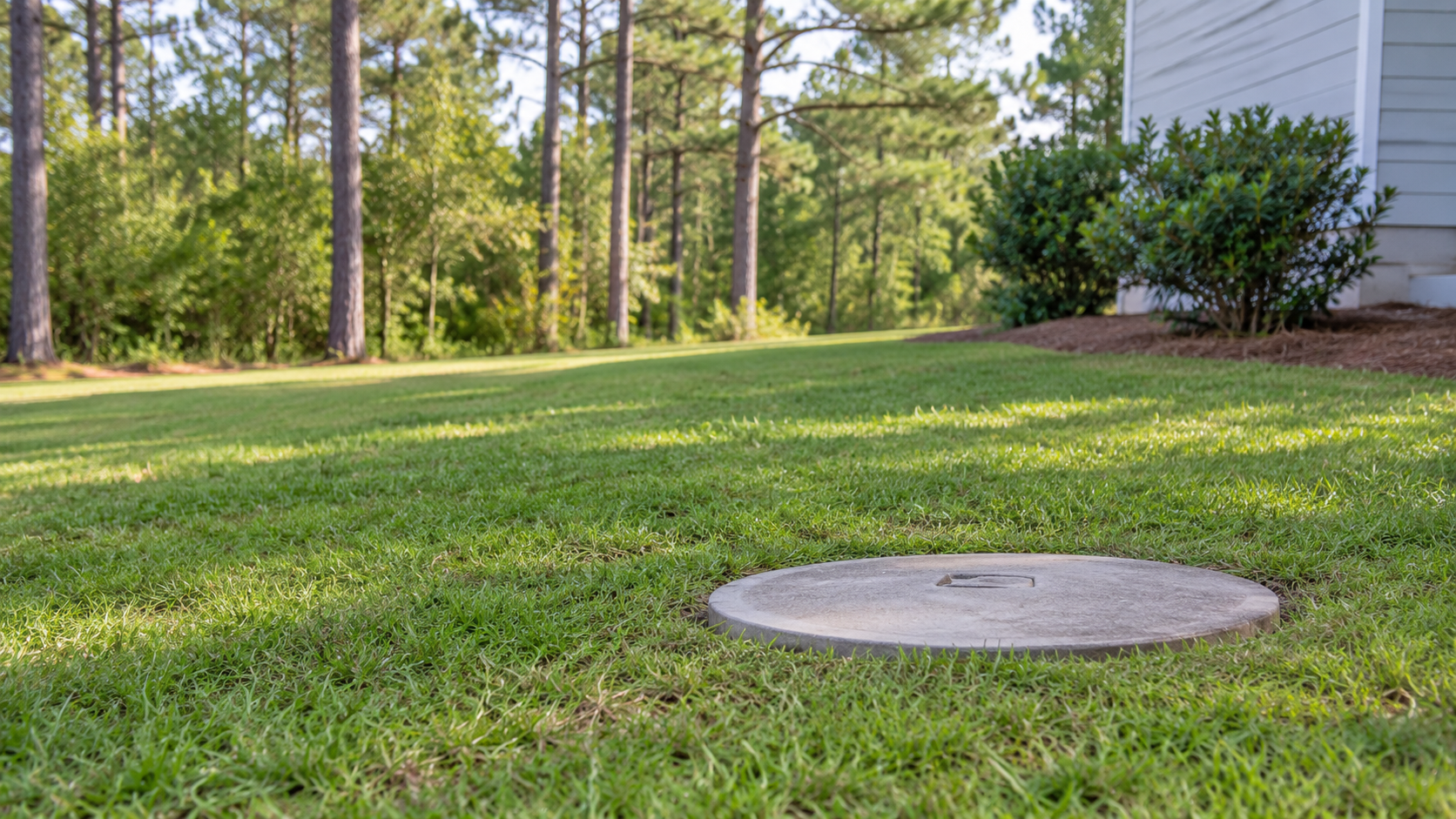
A house on public sewer gets a monthly sewer charge from a utility, and a house on septic does not. The fastest proof is a recent utility bill. Lids or inspection caps in the yard point to a tank, but they do not show its size or condition.
Ask the seller for recent utility bills and look for a sewer line item. Ask the provider to confirm the address is connected, not just that a line runs past it. No sewer charge means a request to the Baldwin County Health Department for the septic file.
A listing that says sewer available is not the same as connected. Many sellers honestly do not know, so get the answer in writing.
2. Three providers serve sewer around Gulf Shores and Orange Beach
Sewer service on the Alabama coast depends on the address. The City of Orange Beach runs a sewer plant that serves all locations within the city. Gulf Shores Utilities, a city-appointed board, serves an area from Gulf State Park to historic Fort Morgan, and Baldwin County Sewer Service serves parts of Fort Morgan and other areas around Gulf Shores.
In Gulf Shores and Orange Beach, where Heather Loper & Associates works, call the provider with the parcel address. Fort Morgan needs the most care, because two providers work there.
Assuming a lot is sewered because the neighbors are is the mistake. One parcel can sit past the last line. A working septic system is fine, but price it as septic.
3. The septic permit on file should match the house
Alabama requires a health department permit before anyone installs or repairs a septic system, and the tank for a home is sized by the number of bedrooms. The permit file shows what was approved. Where the health department finds a system installed without a permit on or after March 18, 1982, it can require a repair permit and bring the system into compliance.
Request the permit and the as-built drawing from the Baldwin County Health Department. Compare the approved bedroom count with the listing, and settle any gap before closing.
No file at all is the red flag. Fixing an unpermitted system after closing can mean a soil test, an engineered design and a new install at your cost.
4. A bedroom, pool or garage can outgrow a septic lot
Alabama rules bar building on a septic site in a way that harms the disposal area, or developing a lot beyond what the system can treat. Because tank size follows bedroom count, an added bedroom can mean a larger system. A change in sewage flow turns a repair into a relocation, which the rules treat as a new system.
Before you buy with a project in mind, sketch it on the as-built drawing. Ask a licensed installer or the health department whether the drainfield and setbacks leave room.
Planning an addition without checking the drainfield is the costly order of operations. The project can stall at permit review. Some lots have room and some do not, so this is a site question, not a rule against building.
5. Wet coastal soils can require an engineered septic system
In Baldwin County, a new or repaired septic system starts with a soil test by a registered soils professional. If the test shows a site restriction, a registered engineer must design the system. Alabama rules require advanced treatment where the seasonally saturated layer sits less than 6 inches below the natural ground surface, which can apply on low coastal lots.
Ask whether the existing system is conventional or engineered, and ask for the design and any service contract. An engineered system with pumps or treatment units needs more upkeep than a tank and field.
Treating every septic system as the same cost is the mistake. A tank on dry sand and an advanced unit on a wet lot are different systems to own. Neither is a dealbreaker.
6. Owning septic in coastal Alabama means paying for upkeep directly
A septic owner pays for upkeep directly instead of through a monthly bill. The EPA's 2017 homebuyer guide says to inspect a system every three to five years and puts each service visit at about $250 to $500. Repair or replacement runs from thousands to tens of thousands of dollars, so the age and records of the system matter.
Ask the seller for pumping receipts and service records, with dates. In Alabama, pumping and repair must be done by a licensed contractor, so a receipt with a company name is checkable. Keep cars and heavy loads off the drainfield.
No records at all is the warning sign. Missing paperwork is not proof of a problem, but it shifts the risk to you.
7. Island sewer owners still maintain the pipe on their property
Public sewer turns septic upkeep into a monthly bill, but the owner still maintains the pipe on private property. In Orange Beach, the city lists sewer at $28 a month inside the city in November 2026. Gulf Shores Utilities makes the customer responsible for the gravity service line, or for every part of a grinder pump system on a low-pressure line.
Ask whether the house has a grinder pump, how old it is and who has serviced it. Gulf Shores Utilities tells owners never to turn off the grinder pump breaker when leaving town, except in a hurricane emergency.
Assuming a sewered house has no equipment to maintain is the gap. A grinder pump is the owner's to repair, so know it is there before the alarm light comes on.
8. Baldwin County owners may have to connect when sewer arrives
Alabama law lets cities require premises to connect to the sewer system. It also directs health boards to require connection where sewers are available and the city does not regulate them. Whether you must connect depends on the local rule. When a tank is taken out of use, it must be pumped by a licensed pumper and then removed or filled with sand or soil.
Ask the utility and the city whether a sewer extension is planned for the street and what a connection would cost. Gulf Shores repays pre-approved Little Lagoon watershed owners in city limits up to $6,500 to convert, as of November 2026.
Ignoring a planned extension is the costly miss, since connection and tank closure costs can land soon after closing. Confirm any help program still runs before you count on it.
Septic and Sewer, Side by Side
| Topic | Septic system | Public sewer |
|---|---|---|
| Who maintains it | The owner, through licensed contractors | The utility to the property line, the owner after it |
| Routine cost | About $250 to $500 per service, EPA 2017 | $28 a month in Orange Beach, November 2026 |
| Big-ticket risk | Repair or replacement, thousands to tens of thousands | Service line or grinder pump repair |
| Records to ask for | Permit, as-built drawing, pumping receipts | Utility bills, grinder pump service history |
Compares what a Baldwin County buyer owns, pays and should ask for under each system.
Frequently Asked Questions
Is septic or sewer better when buying a house?
Neither is better in itself. Sewer moves the upkeep into a monthly bill, while septic puts it on the owner with no bill at all. Judge the system in front of you, not the label.
What are the signs a septic system is failing?
The EPA lists wastewater backing up or gurgling in drains, a strong odor near the tank or drainfield, and bright green, spongy grass over the drainfield. If you see any of them during a showing, ask the seller about service history and call a septic provider before you go further.
Who is allowed to install or repair a septic system in Alabama?
Anyone who installs, repairs, maintains or certifies a septic system in Alabama must hold a license from the Alabama Onsite Wastewater Board, unless state law exempts them. Buyers who ask Gulf Shores realtors for a referral should still check the license number on any quote.
Can a house be sold without an approved sewage system?
Alabama rules say no one may occupy, rent, lease or sell a building as a dwelling unless it has an approved sewage disposal system. A buyer who finds a home with no permitted system or sewer connection should talk to the closing attorney before going further.
Keep reading
Know what is under the yard before you make an offer
Heather Loper & Associates helps buyers sort out septic and sewer details early, from utility bills to permit files. Buyers comparing the top realtors in Gulf Shores can start at heatherloper.com or call (251) 504-1171.
This article is general information about septic and sewer systems in Baldwin County, Alabama, as of November 2026. It is not legal or engineering advice. Confirm your property's system with the Baldwin County Health Department, the utility and a licensed professional.
or another way