
Categories
Home OwnerPublished August 6, 2026
9 Ways to Lower Wind and Flood Insurance in Baldwin County, AL

9 Ways to Lower Wind and Flood Insurance in Baldwin County, AL
There is no single trick to lower wind and flood insurance in Baldwin County. The two policies price different risks and answer to different rulebooks. Wind is priced by construction and by state insurance law. Flood is priced by height above water and by what the city does about drainage.
These nine moves work on one or the other, with the statute, the program or the city page behind each one.
The nine moves, in short:
-
Find out where wind coverage actually sits
-
Know when the wind pool applies
-
FORTIFIED discounts are required by law
-
A grant can cover the roof upgrade
-
Admitted carriers must honor the certificate
-
Price the deductible in real dollars
-
City floodplain work earns a discount
-
Height above water drives flood pricing
-
Buy flood coverage 30 days early
1. Is wind even covered by my homeowners policy, or do I need a separate one?
Wind and flood are two different risks. Neither one is guaranteed to be in a homeowners policy. On the Alabama coast, many policies exclude windstorm and hail, so the owner carries a separate wind policy. The City of Orange Beach puts the flood side plainly: standard homeowners and business policies do not cover flood damage.
A strong answer starts with the declarations page, not a memory. Find the windstorm and hail exclusion. Find the named storm deductible. Write down whether flood appears at all. Three lines on one sheet of paper is the whole starting point.
Assuming full coverage because the premium is high is the costly mistake. A high coastal premium can still sit on a policy with wind carved out. The gap shows up after the storm, when an adjuster splits wind damage from water damage.
2. What is the AIUA wind pool, and does using it cost me more?
The Alabama Insurance Underwriting Association is the state's market of last resort for wind. Its mission is to give owners of eligible property in Baldwin and Mobile counties a way to buy essential insurance when the private market will not write it. Coverage is limited to areas south of the 31st parallel. It carries no liability, no loss assessment and no flood.
A strong answer treats the wind pool as a floor, not a default. Applications go through an authorized agent. The agent cannot bind coverage, because the association decides eligibility. Ask the agent to shop the private market first and to show what came back.
An agent who places a coastal home in the wind pool with no private quotes has skipped a step. Watch for a single quote and no comparison. Ask which carriers were approached, and what each one said, in writing.
3. Does a FORTIFIED roof actually lower the wind premium?
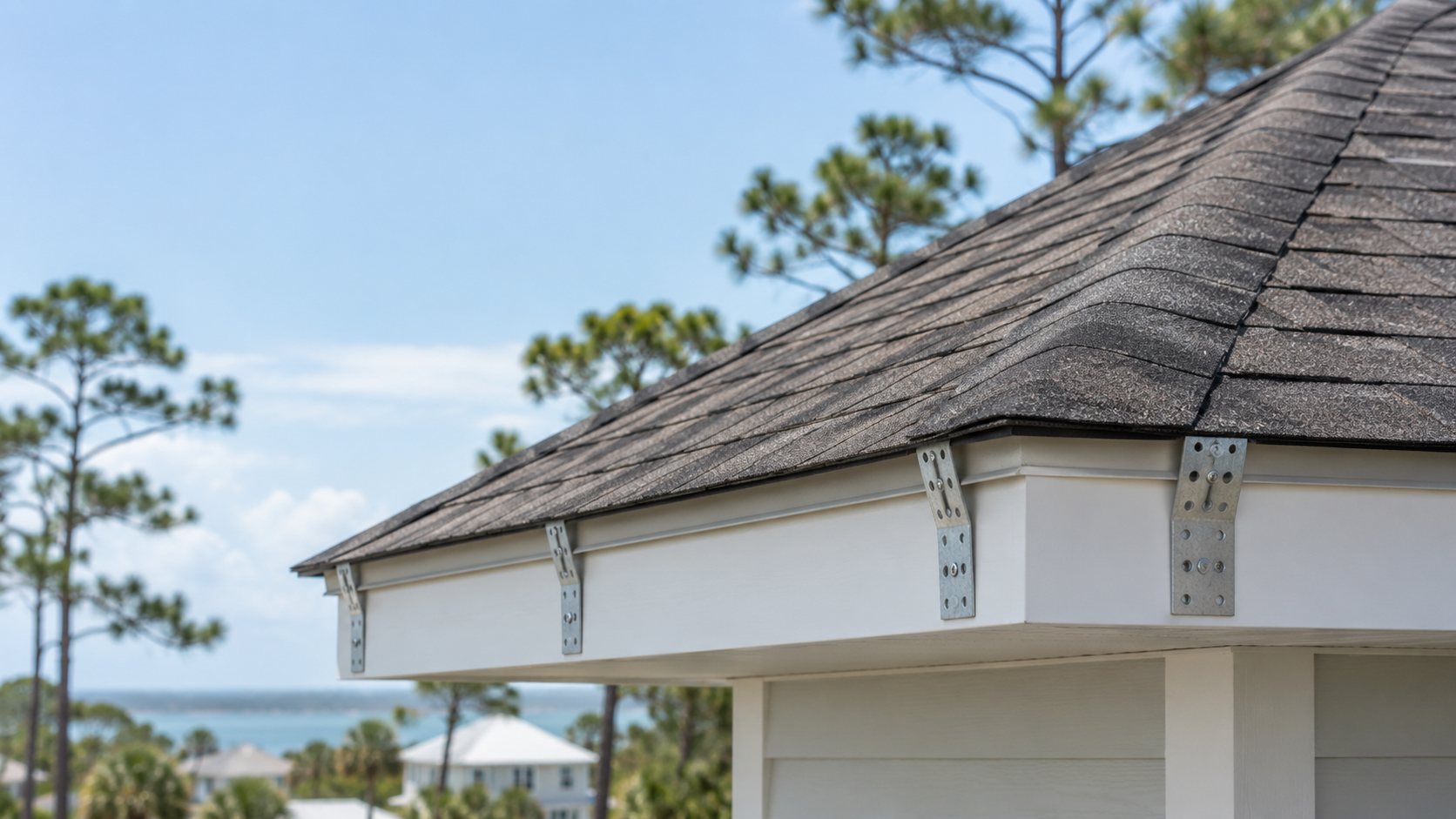
Alabama law does not leave this discount to the carrier. Under Alabama Code 27-31D-2, insurers shall provide a premium discount or rate reduction for homes retrofitted to the FORTIFIED Home standards set by the Insurance Institute for Business and Home Safety. Carriers may also adjust the deductible. The rule applies to policies that provide wind coverage.
A strong answer names the level and the certificate. FORTIFIED comes in Roof, Silver and Gold. The certificate is the document a carrier wants to see. Strengthen Alabama Homes says a designation earns a discount on the wind portion and tells owners to ask their agent what it is worth.
The red flag is a roof called hurricane rated with no certificate behind it. A new roof is not a FORTIFIED roof unless a certified evaluator documented it. Without the certificate there is no discount to claim, only a bigger bill for the same work.
4. Can the state help pay for the FORTIFIED roof?
Strengthen Alabama Homes is a program of the Alabama Department of Insurance. Grants pay 100 percent of the cost of mitigation up to $10,000 for work that reaches the FORTIFIED Roof standard. Applications open by county on announced dates. Baldwin County has been eligible since 2015.
A strong answer covers eligibility first. The home has to be an owner occupied single family primary residence, in good repair, and not listed for sale. The owner also needs an in-force homeowners policy, an in-force wind policy, and flood insurance if the home sits in a special flood hazard area. Condominiums, townhomes and rentals are excluded.
Be careful with a contractor who promises the grant covers everything. The award is not visible until three bids come back, and anything above it is the owner's. A bid that assumes nothing out of pocket is a pitch, not a quote.
5. Will my insurance company have to honor the FORTIFIED certificate?
Not every insurer is bound by the discount law. Strengthen Alabama Homes tells homeowners to check that the company is an admitted carrier rather than a surplus carrier. Admitted carriers must honor the certificate and give the discount. Surplus carriers are not obligated under the law to give it. That one distinction can decide whether a retrofit pays for itself.
A strong answer names the carrier and its status before the work starts. Ask the agent whether the policy is written by an admitted Alabama carrier or through surplus lines. Then ask what the discount will be in dollars once the certificate is issued.
Watch for an agent who answers the admitted question with a brand name and moves on. Surplus lines coverage is legitimate and sometimes the only option. It becomes a problem when an owner spends thousands expecting a discount the policy will never apply.
6. Would a higher hurricane deductible save enough to be worth it?
Coastal wind policies usually carry a separate named storm deductible, often a percentage rather than a flat amount. The wind pool applies its percentage to the total insurable value of the structure, not to the policy limit. Its own example puts a 5 percent deductible on a $750,000 structure at $37,500, even where the limit is $650,000.
A strong answer turns the percentage into dollars on the right base. Ask the agent which value the deductible is calculated on, then set that number beside cash you could reach after a storm. Ask for the premium at two or three deductible levels on one sheet.
A deductible picked only because it lowers the monthly number is a loan from your future self. After a named storm, contractors want deposits. If the deductible is larger than the money you could raise in a week, the saving is not a saving.
7. Does my city's floodplain program lower my flood insurance?
FEMA's Community Rating System gives premium discounts in communities that go beyond the minimum floodplain rules. Discounts run from 5 percent at Class 9 up to 45 percent at Class 1 for policies inside a Special Flood Hazard Area. The City of Orange Beach tells property owners that its participation may qualify them for a 20 percent discount on flood premiums.
A strong answer confirms the discount is actually on the policy. Ask the agent to point at the community discount line on the declarations page. Ask the city floodplain administrator for the current class, since a class can improve or slip between reviews.
The quiet failure is a policy written without the community discount attached. It is easy to miss and nobody's fault in particular. It is also money left behind every year until someone checks. Renewal season is the time to check it.
8. Does elevating the house or proving its height lower a flood premium?
Under FEMA's Risk Rating 2.0, flood premiums are built from the traits of the building rather than a zone label alone. The factors include distance to a water source, elevation, first floor height and the cost to rebuild. In practice, the documented height of the lowest floor is the strongest lever a Baldwin County owner has.
A strong answer starts with the elevation certificate. Orange Beach offers free elevation certificates and flood zone determinations. Gulf Shores keeps certificates for structures built from 1998 on. Orange Beach asks new work to sit two feet above base flood elevation in Zone AE and three feet in VE or Coastal-AE.
Treating the flood zone as the whole story is the error. Two houses in the same AE zone can price very differently on first floor height alone. With no certificate, the policy may be rated on assumptions that rarely run in the owner's favor.
9. When should I buy or change flood coverage so it is actually in force?
Flood coverage does not start the day it is bought. A new National Flood Insurance Program policy takes effect 30 days after purchase. There is no wait when the policy is bought while making, increasing, extending or renewing a mortgage, and none when coverage changes at renewal. A one day wait applies where a property is newly designated into a high risk zone and bought within 12 months of the update.
A strong answer works backward from June 1, the start of Atlantic hurricane season. That makes early May the deadline for any change. The statistical peak falls on September 10, so late August is too late.
Watch for advice to wait and see how the season looks. Once a storm is named and in the Gulf, the waiting period is still 30 days. The forecast changes nothing. Waiting costs nothing right up to the moment it costs everything.
Wind Coverage Versus Flood Coverage
How the two coastal policies differ on where they sit, who backstops them and what actually lowers the price.
Frequently Asked Questions
How much does flood insurance cost in Alabama?
There is no single Alabama number, and any page quoting one is averaging properties that have nothing in common. Under Risk Rating 2.0, FEMA prices each building on its own distance to water, elevation, first floor height and cost to rebuild. The only figure worth acting on is a quote run on the address.
What is the cheapest homeowners insurance in Alabama?
The cheapest carrier for an inland ranch house is rarely the cheapest for a raised home near the water. The question only has an answer address by address. The Alabama Department of Insurance publishes homeowners premium comparisons so consumers can see how carriers line up. Strengthen Alabama Homes notes that admitted carriers must honor a FORTIFIED certificate while surplus carriers are not obligated to, and which market fits a given house is a question for a licensed agent.
Does a condominium owner need wind and flood coverage too?
Usually yes, and the split depends on the condominium documents. The master policy covers what the declaration says it covers. Everything left to the unit owner is the owner's to insure. Wind pool policies exclude loss assessment coverage, which is the piece that pays when an association bills owners for a shortfall.
What is a FORTIFIED evaluation and who pays for it?
A FORTIFIED evaluation is an inspection by a certified evaluator. The evaluator documents the work needed to reach the standard, then certifies the finished job. The homeowner pays the fee, and fees vary, so it is worth getting several prices. A home that fails the evaluation is not eligible for the state grant.
Does the FORTIFIED work help when I sell?
It can. Strengthen Alabama Homes cites a University of Alabama study finding that FORTIFIED homes sell for nearly 7 percent more. In Orange Beach and Gulf Shores, where Heather Loper & Associates works, the certificate also answers the insurance question a buyer raises during the inspection period. Best real estate agents in Orange Beach ask for it up front.
Get the insurance picture before the offer, not after
Heather Loper & Associates works coastal Baldwin County every week. The team can pull the flood zone, the elevation certificate and the FORTIFIED status on an address before an inspection period runs out. Owners comparing the top realtors in Orange Beach can start with that one conversation, because the insurance line moves a coastal payment more than the interest rate does.
or another way