
Categories
BuyerPublished August 8, 2026
9 Short-Term Rental Rules Orange Beach Buyers Should Know

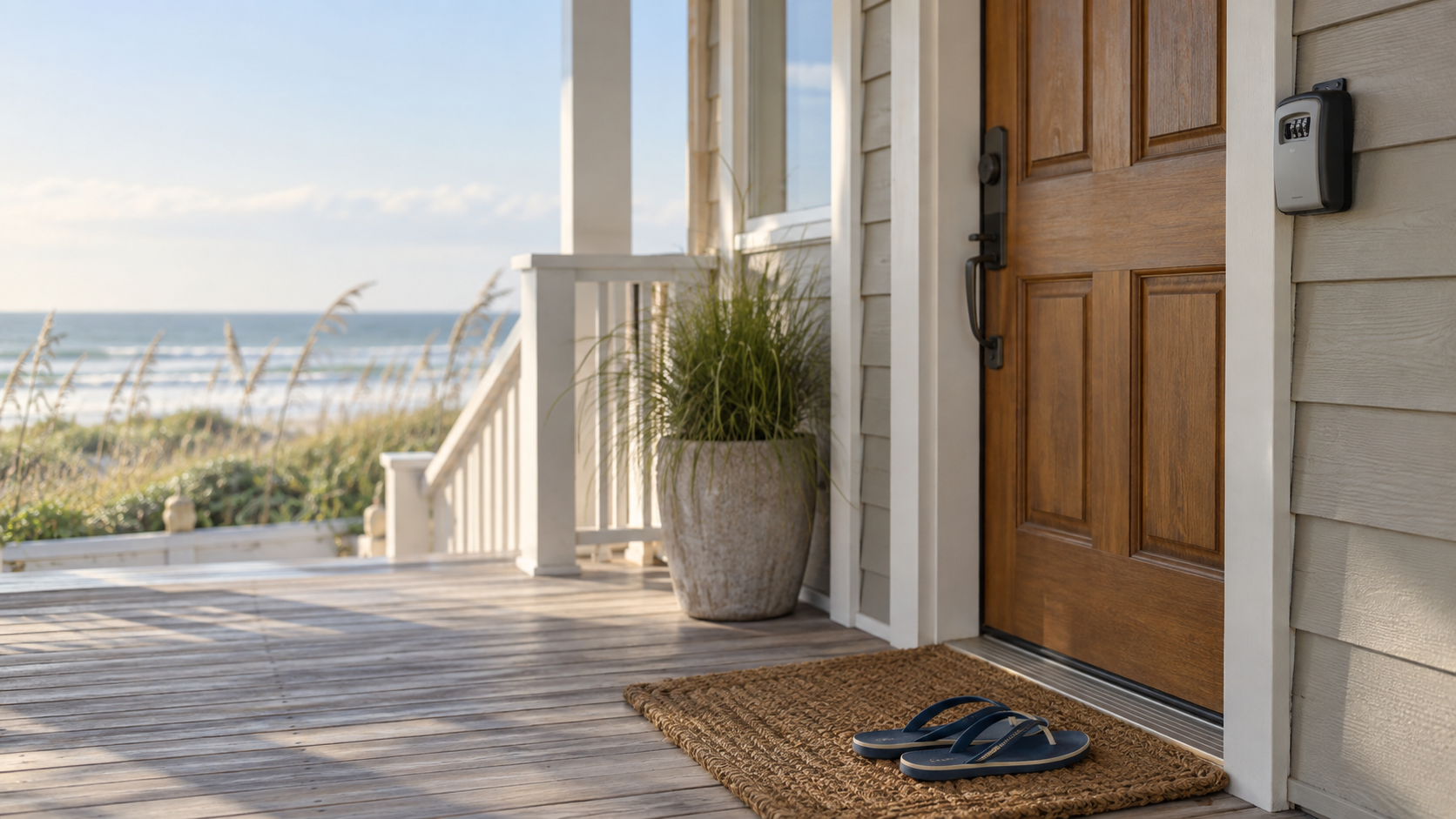
9 Short-Term Rental Rules Orange Beach and Gulf Shores Buyers Should Know
Short term rental rules in Orange Beach and Gulf Shores are written by two different cities. Neither of them is a booking platform. Each city runs its own zoning test, its own license, its own inspection and its own tax filing.
A condo tower and a single family house on the same island can land under different rules. These are the nine rules that decide what a property is actually allowed to do.
The nine rules, in short:
-
Whether the location allows short term rentals
-
How each city defines short term
-
Which license the property needs
-
City inspections and their frequency
-
Legal overnight occupancy limits
-
Who answers complaints around the clock
-
Lodging tax on every booking
-
License renewal dates in both cities
-
What the association controls
1. Is this property allowed to be rented short term where it actually sits?
Zoning answers this before any license does. Orange Beach regulates vacation rentals in the RS-1, RS-2, RS-3 and MHS zoning districts. It leaves out properties inside the beach overlay district. A vacation rental there means a single family or two family dwelling offered for fourteen consecutive days or less. Condominium towers generally sit outside those residential districts.
A strong answer names the zoning district on the parcel, not on the street. Pull it from the city rather than the listing. Then confirm whether the property is a single family or two family dwelling. That is the phrase the Orange Beach ordinance turns on.
A listing that says rental friendly without naming a zoning district is repeating what the last owner believed. The ordinance also states that it does not apply in the police jurisdiction. That is a different question from being inside the city limits. Ask which one the address falls in.
2. What actually counts as a short term rental in each city?
The two cities draw the line in different places. Orange Beach defines a vacation rental as a single family or two family dwelling offered for fourteen consecutive days or less. Gulf Shores does not define short term that way. It licenses rentals, and exempts an owner of no more than one unit leased under written agreement for 180 days or more.
A strong answer quotes the Orange Beach definition, then holds it against the booking calendar. A property taking weekly bookings needs a license in both cities. A single unit on one written lease of 180 days or more is the case Gulf Shores exempts from its annual license.
Treating the two cities as one rulebook is the error that costs the most. So is reading the Gulf Shores 180 days as a definition of short term. It is a narrow licensing exemption for one unit under written agreement.
3. What license does the property need, and whose name goes on it?
Both cities want a license before a property earns a dollar. Orange Beach sets the fee for a vacation rental license at $500. Gulf Shores charges a rental fee of $45 for short term rentals, on top of a business license based on gross receipts. Orange Beach states plainly that the license is the responsibility of the owner and not the management company.
A strong answer names the license, the fee and the applicant. The city's rental license page and checklist ask for the application, a driver license copy, a local emergency contact under Code of Ordinances Section 8-41, and lodging tax collection and remittance.
A seller who says the management company handles all of that has described a service, not a legal position. Orange Beach puts the license on the owner whoever takes the bookings. When the paperwork is wrong, the owner is the one the city calls.
4. What does the city inspect, and how often?
Gulf Shores lists a rental safety inspection every three years on its rental license checklist. The fire marshal performs it where applicable. Orange Beach takes a different route. Its vacation rental application requires a signed affidavit. The owner certifies that the rental meets all applicable fire, building and safety code requirements. The licensee must also let the city inspect on written 24 hour notice.
A strong answer says when the last inspection happened and what it covered. Smoke detectors, egress windows and life safety equipment are the usual items. Ask for the record in writing, because a buyer inherits the schedule rather than a fresh start.
An owner who has never had an inspection in a city that runs a three year cycle has a gap to close. It is often a paperwork problem rather than a safety problem. It is still the buyer problem the day after closing.
5. How many people can legally sleep in the property?
Orange Beach caps overnight occupancy in the license conditions. Section 50-648 says the licensee must limit overnight occupancy to the numbers in a table in that section. The ordinance also defines a bedroom precisely: at least 70 square feet for single occupancy, seven feet in any horizontal direction, a seven foot ceiling, two means of egress, an openable window, a heating system and a smoke detector.
A strong answer gets the current table from the city rather than guessing. The license application requires a floor plan to scale showing each bedroom to be rented, so count the rooms that meet the ordinance definition and ask the city what the table allows.
Sleeps twelve in a headline is a marketing number until the bedrooms are checked. Overstating occupancy sets a guest expectation the license cannot support. It also puts the license itself at risk, because occupancy sits inside the license conditions.
6. Who has to answer the phone when a neighbor complains at midnight?
Orange Beach builds the answer into the license. Section 50-648(7) says the owner and the authorized agent must both be available by telephone 24 hours a day for the duration of the rental. The application in Section 50-645(a)(6) asks for a name and number for the owner or authorized agent, available 24 hours a day, seven days a week.
A strong answer names a real person and a real phone number, and says who covers nights and holidays. Section 50-650 requires a response within 30 minutes of notification of a complaint, then a report to the city. Gulf Shores also asks owners to designate a local emergency contact.
A management company listed as the contact with no named person behind it is the setup that fails at midnight. Thirty minutes is a short window. An owner planning to take those calls personally from two time zones away should think again.
7. What taxes come off the top of every booking?
Lodging tax is collected from the guest and remitted by the owner. Orange Beach lists its current rate as 16 percent: 10 percent city, 4 percent state and 2 percent Baldwin County lodging tax. Gulf Shores publishes its own total as 16 percent inside the corporate limits and 11 percent in the police jurisdiction.
A strong answer separates what a booking platform collects from what the owner still has to file. It comes from the city, not from a platform help page. In Orange Beach and Gulf Shores, where Heather Loper & Associates works, those are two separate finance departments with two separate filing calendars.
Assuming the platform handles all of it is the most common tax error in both cities. The filing obligation stays with the owner even when a platform collects part of it. A gap here surfaces as a delinquency notice, not a polite reminder.
8. When do the licenses renew, and what happens if the date slips?
Both cities run licensing on the calendar year. Orange Beach states that the license expires December 31 each year, and that owners have until January 31 to renew without penalty. Gulf Shores states that business licenses expire December 31, that renewals are due January 1, and that they are delinquent after January 31. A December closing sits right on top of both deadlines.
A strong answer ties the renewal date to the closing date. A buyer closing in the fourth quarter should ask who is renewing the license, and in whose name. Put the answer in writing before closing, along with the name of the city staffer who confirmed it.
Leaving the renewal to sort itself out after closing is how a property misses its first January. Orange Beach prohibits operating a vacation rental business in the city without a license. A lapse is not only a late fee, because next summer gets booked in winter.
9. What can a condo association or HOA do that the city cannot?
A city license does not override a private rule. Associations set their own minimum stays, registration steps, parking rules and caps on how many units may rent. Section 35-8A-409 separately makes a seller hand over the declaration, bylaws and rules on the purchaser's written request within 14 days of signing, before conveyance and within 15 days of the request.
A strong answer produces both sets of rules: the city license conditions and the association documents. Ask the association whether rentals are capped, whether there is a waiting list, and whether the board has discussed a change. The minutes are the honest version.
A city license is sometimes presented as proof that renting is fine. It proves the city is satisfied. It says nothing about the association. That body can be the stricter of the two, and it can change its rules at a meeting the buyer never hears about.
Orange Beach and Gulf Shores, Rule by Rule
Two cities, two rulebooks. Confirm every line with the city before writing an offer.
Frequently Asked Questions
Are short-term rentals allowed in Gulf Shores, Alabama?
Yes, with a license. Gulf Shores requires a rental property business license. Its rental license page and checklist list a rental fee of $45 for short term rentals, a designated local emergency contact under Code of Ordinances Section 8-41, a rental safety inspection every three years, and lodging tax collection and remittance. One exemption exists, for an owner of no more than one unit leased under written agreement for 180 days or more.
Does Orange Beach ban Airbnb?
No. Orange Beach regulates vacation rentals rather than banning a platform. The ordinance covers single family and two family dwellings in the RS-1, RS-2, RS-3 and MHS zoning districts, for stays of fourteen consecutive days or less. It excludes the beach overlay district. Much of the Gulf front condominium inventory therefore sits outside that ordinance. Those buildings answer to their own association rules instead.
Why do searches for Orange Beach rental rules return Orange County results?
Because the names collide. A search for Orange Beach short term rental rules often surfaces pages about Orange County, Florida, and Orange County, California. Neither has anything to do with Alabama. Check the domain before trusting an answer. The two that matter are the City of Orange Beach and the City of Gulf Shores. Those are the sites top realtors in Orange Beach point clients to first.
Does a rental license transfer to the buyer at closing?
Do not assume it does. Both cities run licensing on a calendar year that ends December 31. Orange Beach states that the license is the responsibility of the owner and not the management company. Confirm the handling with the city finance department before closing, and get that answer in writing rather than from the current owner.
How much is lodging tax on a Gulf Shores or Orange Beach rental?
The City of Orange Beach lists its current lodging tax rate as 16 percent: 10 percent city, 4 percent state and 2 percent Baldwin County lodging tax. The City of Gulf Shores publishes 16 percent inside its corporate limits and 11 percent in the police jurisdiction. Rates move by ordinance, so confirm the figure with the city before running any numbers.
Check the rules on a specific address before the offer
Heather Loper & Associates lists and sells across Orange Beach and Gulf Shores. The team helps buyers confirm zoning, licensing, occupancy and lodging tax on one specific address before an offer goes in. Buyers comparing Orange Beach realtors can start with the property they are actually looking at rather than a general answer.
or another way